On UFOs & Getting Struck By Lightning: The Non-Rational Mind's Battle Against Cynicism
When we leave ourselves open to the absurdity of things and to the freedom of interpretation, we become convinced that not only is a non-rational outlook valid, it might even be a requirement to oppose norms that limit our freedom.

I read somewhere that you're more likely to get struck by lightning than win the lottery, and so whenever my wife asks me if we could try buying lottery tickets, I always ask her if she feels like she's going to get struck by lightning one of these days.
Now, millions of people play the lottery every day, and most of them are aware of the odds, so they probably think they have a good chance of catching a lightning bolt while walking down the street. Or at least the price to pay is worth it for that long of a shot.
But, seriously, I'm not even the best example of a rational thinker myself. In fact, I habitually knock on wood three times whenever I say something dark in the course of a conversation to ensure I don't cause it to happen in the future.
What's clear is that most of us hold incompatible beliefs without noticing: we plan like tomorrow is predictable, then pray like it isn’t. There's also a feeling that reality isn’t exhausted by the causes we can name.
This sense of contingency enables us to disregard overwhelming odds and gamble, allows us little superstitions, and maybe even gives us the capacity to hope and pray in the midst of a crisis when defeat or tragedy is almost certain.
But where does that non-rational impulse come from, and is this a valid way to live? What I’m calling the “non-rational” isn’t the enemy of reason—it’s the part of experience that arrives before explanation, and the part of us that refuses to let the world close.
I'd like to open the new year by taking a look at these questions.
An Encounter With the Absurd
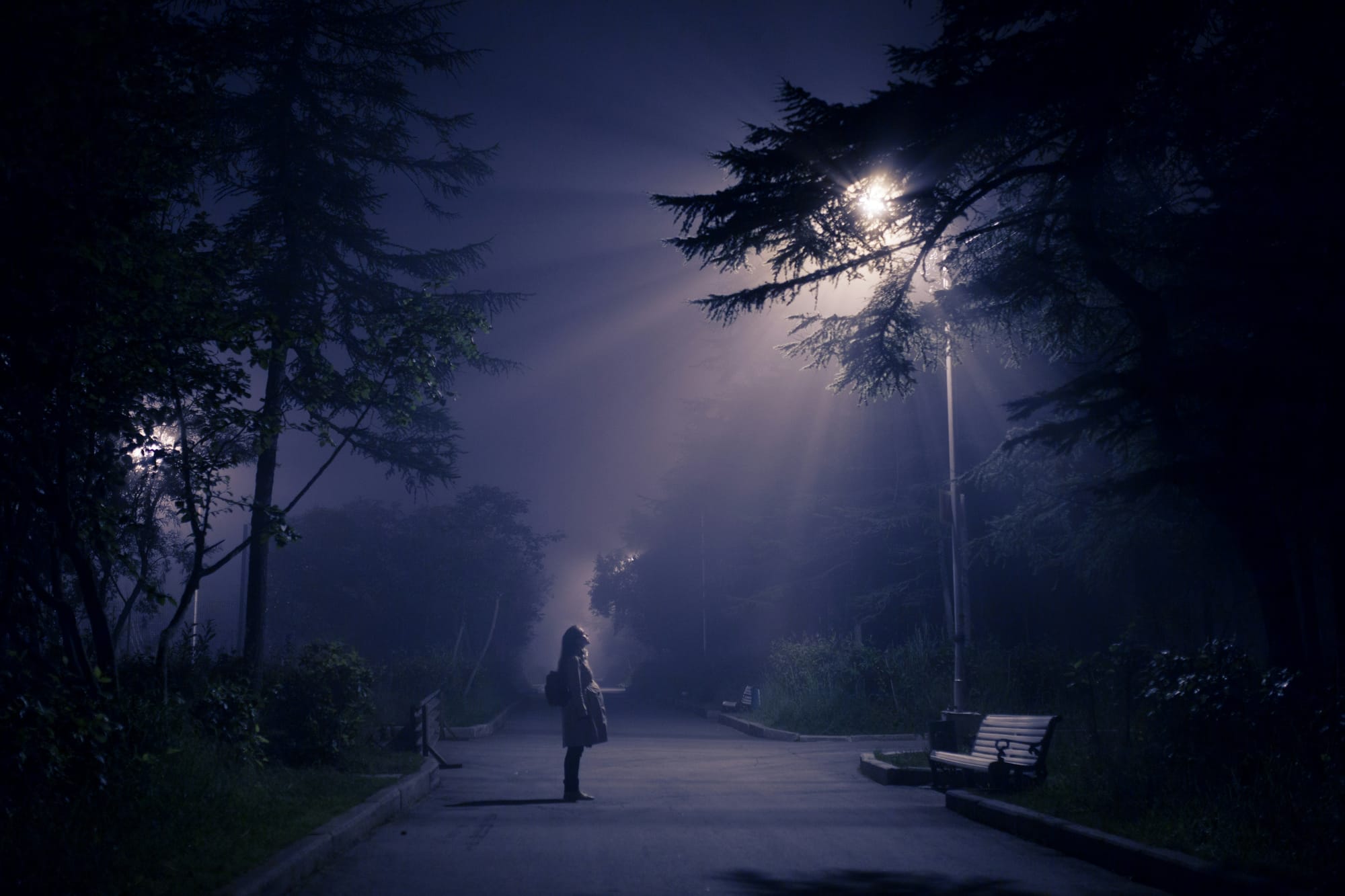
In the course of everyday life, we take most meanings and causes for granted; we need to, in order to function. For example, while walking down the street, I need to unconsciously believe that the sky will not randomly throw a spear of lightning over my head.
Furthermore, I need to believe, just as automatically, that I really do have to go to work. The fact that lightning doesn't reduce me to ash, and that my office is always there waiting for me is very reassuring. This web of meanings functions like clockwork. It feels crazy to question them, until something forces the question.
Sometimes we encounter things that can throw our beliefs and routines into chaos. For instance, someone who we least expect to perish suddenly dies, or we might become an unexpected witness to violent crime. There are people in the world who wake up to the news that their country's at war.
Unexplainable happenings can also make us stop and question everyday realities. You might swear that you saw a ghost when in fact you've never believed in ghosts and other such "nonsense" before. Many UFO believers started out as the most uninterested in the subject until they observed firsthand flying objects or orbs of light in the sky that defy all common sense explanation.
When these events happen, our sense of contingency comes to the fore. Those who experience sudden death and destruction may ask questions that push notions of probability to the extreme like: What if it's me who's next to catch an incurable disease? What if tomorrow I am drafted to war? Why did that person die and not me? Why are some people chosen and not me?
Witnesses of the unexplained ask ultimate questions in the same vein: Are spirits and the afterlife actually real? Is there another world other than the physical world? Are there really beings other than humanity in the cosmos? What are we really living for? Is this the best way to live? Is everything a lie?
When we encounter the absurd, we come face-to-face with the realization that while this web of meanings is a functional and comforting one, it's still socially constructed; and anything constructed can be brought down. A nagging feeling that our life's predictability and givenness are artificial and deserve to be questioned creeps up over us. These thoughts can explode into a full-blown existentialist philosophical outlook: Who am I and what am I supposed to do if nothing is predetermined?
But then soon, life's routines take over as expected. The dead are grieved, the loss is accepted, then, most days, forgotten. Wounds are healed. Conflicts are resolved. The unexplained is disregarded as mere imagination or incorporated into our personal beliefs. We move on.
A Non-Rational World that Impinges on the Rational
One asks, however, if the world stops being non-rational the moment we repair the ruptured web of meanings or if it continues to do so even after we've moved on.
Is this indeterminacy or absurdity simply an abnormal hiccup in the normal world of determinacy—or is there a non-rational world that constantly impinges on the rational?
In Flying Saucers: A Modern Myth of Things Seen in the Skies, Carl Jung, one of the most influential psychologists of the early 20th century and founder of the school of analytical psychology, contemplates UFOs.
He says:
"I came to the same conclusion as Edward J. Ruppelt, one-time chief of the American Air Force's project for investigating UFO reports. The conclusion is: something is seen, but one doesn't know what."
Jung wasn't interested in investigating whether the physical reality of UFOs was true or not, but only in the psychological aspect of the phenomenon. He noted that there was a global desire for UFOs to be real, and that this coincided with a world mood primed for salvation. He wrote his thoughts during the Cold War when the world was gripped by the political tension between the U.S. and the Soviet Union.
People's belief in UFOs, he says, is an archetypal projection. The discs resemble the mandala—a circle denoting the need for totality or wholeness at a time when the world was splitting into two.
What makes this psychological analysis relevant to our present exploration is that Jung seems to be saying that something unexplainable happened first, and then the unconscious projection came later. In other words, first comes the non-rational event, then secondly, the rational interpretation wrapped in the worldview of the times.
He even questions the assumption that the phenomenon consists of aliens visiting our planet: "We on our side want to fly to the moon or to Mars, and on their side the inhabitants of other planets in our system, or even of the fixed stars, want to fly to us. We at least are conscious of our space-conquering aspirations, but that a corresponding extra-terrestrial tendency exists is a purely mythological conjecture, i.e., a projection."
It's important to note here that stories about UFOs since Jung's time have never stopped, and, in fact, have taken a most unusual turn in recent years with credentialed government officials going on record with claims and testimony about UAP. Most notably, in 2023, three US military veterans testified in Congress about their personal knowledge and experience of the subject, including a secret multi-decade reverse engineering program for recovered vessels. A former United States Air Force (USAF) officer and intelligence official even said the US has recovered non-human "biologics" from alleged crash sites.
In March 2024, the Pentagon’s AARO said it found no verifiable evidence that the U.S. has reverse-engineered extraterrestrial technology.
All in all, it seems we are definitely living in a reality far more absurd than we would like to pretend it to be. We conveniently gloss over this absurdity in our day-to-day lives when it tends to cause discomfort, but become intensely aware of it during personal encounters, and call upon it when absolute certainty doesn't work in our favor.
A Drift Towards The Cynical
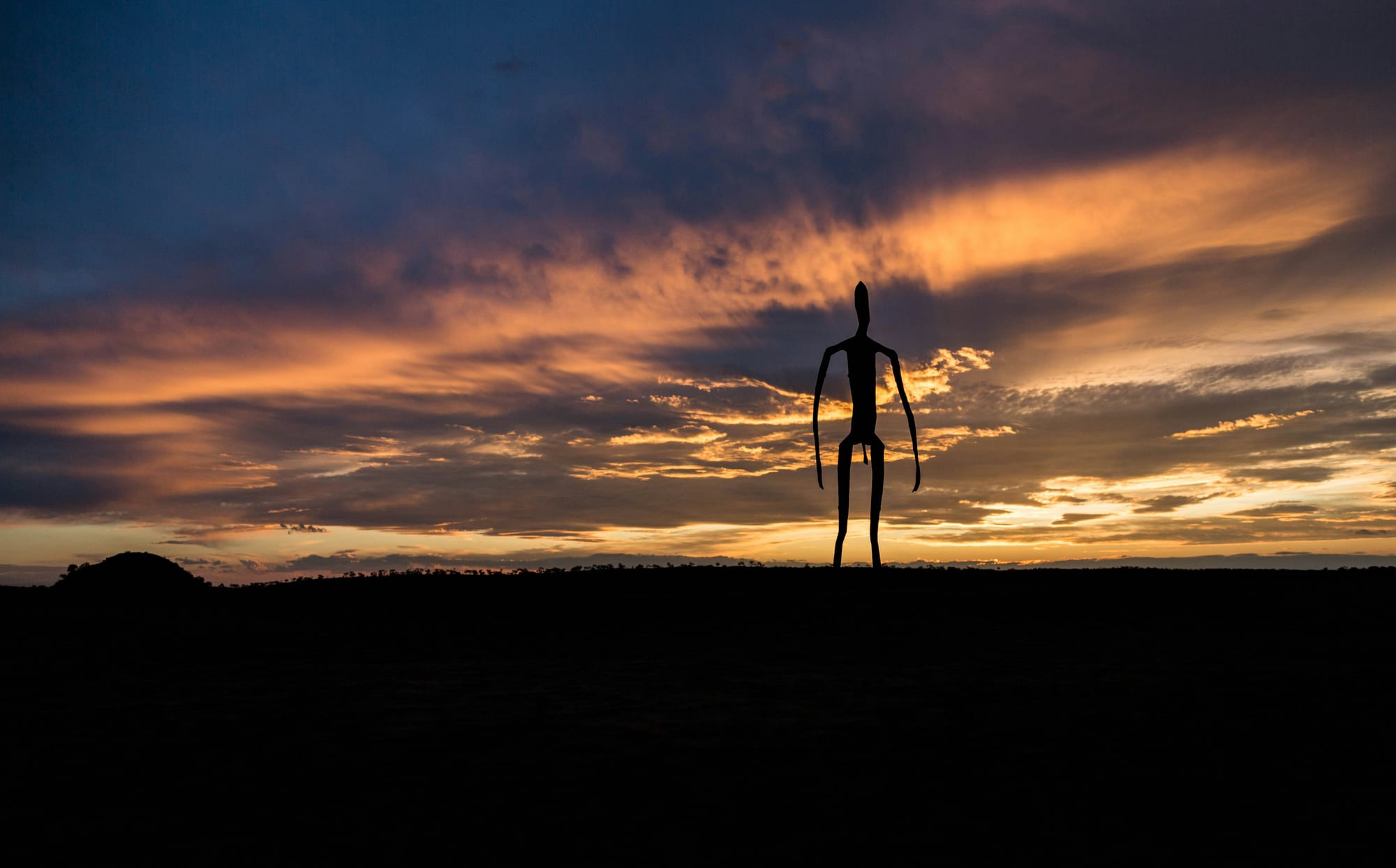
Cynicism is what certainty turns into when it can't imagine any more alternatives. And it can begin with the simplest assumption—that there are things you can question, and things you can't.
What separates a UFO sighting from going to work is that the former doesn't lend itself easily to the comforting given meanings and causes we need to function. Flying saucers equally defy scientific principles, religious beliefs, and the everyday preoccupations of normal people just wanting to get by. They should not exist or have a reason to do so, but they seemingly do.
This is why UFOs fascinate: they’re not just a claim about objects in the sky—they’re a stress test for whether we can live without closure.
On the other hand, the necessity of walking down the street to the workplace is as sure as the rising sun.
But philosophically speaking, there's no law inscribed in the universe that makes both events a must. Yes, you are compelled to walk to your job but, ultimately, you have a choice not to (this is, of course, a tenet of existentialism). You have never been struck by lightning before, but that's not a guarantee you will never get hit by it in your lifetime. UFO reports often refuse the kinds of repeatable, instrumented certainty our sciences prefer, but as the great science fiction writer Arthur C. Clarke reminds us, any sufficiently advanced technology is indistinguishable from magic.
UFOs can be anything. Going to work need not be. Not getting struck by lightning is never a certainty.
When we leave ourselves open to the absurdity of things and to the freedom of interpretation, we become convinced that not only is a non-rational outlook valid, it might even be a requirement to oppose norms that limit our freedom.
After all, a certain naivety helps against the backdrop of life's cynical certitude. Superstition, magic, luck, a desire for disbelief—all provide a counterpoint to the mechanical immediacy of social roles and logical principles we are expected to comply with. To subvert given meanings, we must be ready to bend them and break them even if alternatives sound downright insane. Because without openness to the non-rational quality of existence, how will it be possible to hope for change?
Finally, if we refuse to believe that everything is determined, it's not because we are less informed than our more scientifically sound neighbors; it's more because we accept that meanings are not essential, and we are more free than what we imagine ourselves to be. The responsibility that goes with that freedom doesn't disappear when we surrender to our work schedule. It doesn't go away when we brand UFO believers lunatics.